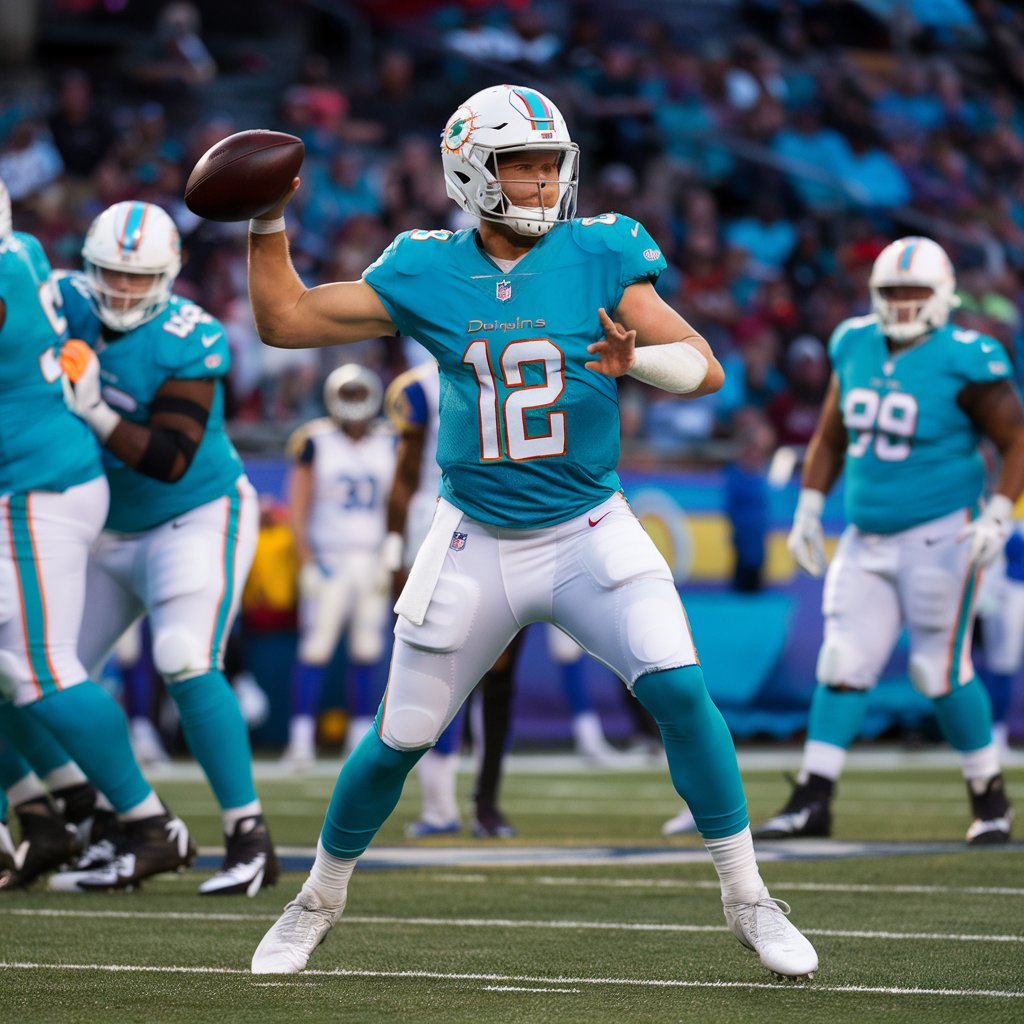
The clash between the miami dolphins vs los angeles rams match player stats was one of the most anticipated matchups of the season, bringing together two teams known for their explosive offenses and disciplined defenses. Fans were treated to a thrilling contest filled with big plays, tactical brilliance, and standout individual performances. The Miami Dolphins vs Los Angeles Rams match player stats reveal not only the story of the game but also the key contributors who shaped its outcome. From quarterback duels to defensive masterclasses, this game showcased the depth, talent, and determination of both franchises. This article provides a detailed analysis of the match, complete player statistics, and insights into how each team executed its game plan.
Match Overview
The Miami Dolphins vs Los Angeles Rams matchup lived up to expectations, delivering a high-energy contest that kept fans on the edge of their seats. The Dolphins entered the game with momentum, led by their dynamic offense and improving defense, while the Rams aimed to assert their dominance with a balanced attack and strong defensive line. The game was a tactical battle between two well-coached teams, with both sides showcasing their strengths in different phases.
The Dolphins relied heavily on their passing game, with quarterback Tua Tagovailoa orchestrating the offense efficiently. The Rams, on the other hand, leaned on their running game and short passing routes to control possession. The result was a tightly contested match where execution, discipline, and individual brilliance made the difference.
Miami Dolphins Player Stats and Performance Analysis
Tua Tagovailoa (QB) – 24/33, 285 yards, 3 TDs, 1 INT
Tagovailoa delivered a composed and confident performance, spreading the ball effectively across multiple receivers. His accuracy under pressure and ability to extend plays were crucial in maintaining offensive rhythm. Despite one interception, his leadership and poise stood out, especially in key third-down situations.
Tyreek Hill (WR) – 8 receptions, 132 yards, 1 TD
Hill was electric throughout the game, using his speed and agility to exploit gaps in the Rams’ secondary. His touchdown catch in the second quarter shifted momentum in Miami’s favor. Hill’s chemistry with Tagovailoa continues to be one of the most dangerous offensive connections in the league.
Jaylen Waddle (WR) – 6 receptions, 78 yards
Waddle provided consistent support as a secondary target, converting crucial third downs and keeping drives alive. His route running and quick acceleration made him a constant threat in the slot.
Raheem Mostert (RB) – 15 carries, 92 yards, 1 TD
Mostert’s explosive runs added balance to Miami’s offense. His ability to find gaps and break tackles kept the Rams’ defense on its heels. His touchdown run in the third quarter was a highlight of the game.
Bradley Chubb (LB) – 6 tackles, 2 sacks, 1 forced fumble
Chubb was a defensive powerhouse, constantly pressuring the Rams’ quarterback and disrupting plays in the backfield. His forced fumble in the fourth quarter sealed the Dolphins’ defensive dominance.
Jevon Holland (S) – 8 tackles, 1 interception
Holland’s awareness and positioning were key in limiting the Rams’ deep passing attempts. His interception in the second half prevented a potential scoring drive and shifted momentum back to Miami.
Los Angeles Rams Player Stats and Performance Analysis
Matthew Stafford (QB) – 27/41, 310 yards, 2 TDs, 2 INTs
Stafford showcased his trademark arm strength and accuracy but struggled with turnovers under pressure. While he connected well with his receivers, two costly interceptions proved decisive. His leadership kept the Rams competitive, but Miami’s defense capitalized on his mistakes.
Cooper Kupp (WR) – 10 receptions, 145 yards, 1 TD
Kupp was once again the focal point of the Rams’ offense, displaying elite route running and reliable hands. His touchdown in the first quarter set the tone early, but he faced tight coverage as the game progressed.
Puka Nacua (WR) – 7 receptions, 88 yards
Nacua continued his impressive form, providing Stafford with a dependable target. His ability to find soft spots in Miami’s zone defense helped sustain drives, though he was held out of the end zone.
Kyren Williams (RB) – 14 carries, 65 yards, 1 TD
Williams ran with determination, breaking tackles and contributing effectively in short-yardage situations. His touchdown run in the second quarter tied the game temporarily, showcasing his physicality and vision.
Aaron Donald (DT) – 5 tackles, 1 sack, 2 QB hits
Donald was a constant presence on the defensive line, applying pressure on Tagovailoa and disrupting Miami’s rhythm. Despite his efforts, the Dolphins’ quick passing game limited his overall impact.
Ernest Jones (LB) – 9 tackles, 1 sack
Jones led the Rams in tackles, showing great awareness and tackling efficiency. His ability to read plays and close gaps was vital in containing Miami’s running game.
Key Match Statistics
|
Category |
Miami Dolphins |
Los Angeles Rams |
|---|---|---|
|
Total Yards |
415 |
398 |
|
Passing Yards |
285 |
310 |
|
Rushing Yards |
130 |
88 |
|
Turnovers |
1 |
2 |
|
Time of Possession |
31:45 |
28:15 |
|
Third Down Efficiency |
8/13 |
6/14 |
The statistics highlight how evenly matched both teams were. Miami’s superior efficiency on third downs and fewer turnovers ultimately gave them the edge. The Dolphins’ balanced offense and opportunistic defense proved decisive in securing the win.
Tactical Analysis
The Miami Dolphins vs Los Angeles Rams match player stats reveal two contrasting tactical approaches. Miami relied on quick passes, motion plays, and explosive runs to stretch the Rams’ defense horizontally. Their offensive line provided solid protection, allowing Tagovailoa to make confident throws. Defensively, Miami’s aggressive blitz packages forced Stafford into hurried decisions, leading to turnovers.
The Rams, meanwhile, focused on controlling possession through short passes and a steady running game. While this approach worked early, Miami’s adjustments in the second half neutralized their rhythm. The Dolphins’ secondary, led by Jevon Holland, effectively contained deep threats, forcing the Rams to settle for shorter gains.
Conclusion
The Miami Dolphins vs Los Angeles Rams match player stats tell the story of a game defined by execution, adaptability, and individual brilliance. Miami’s offensive balance and defensive resilience proved too much for the Rams, who fought valiantly but fell short due to turnovers and missed opportunities. Tua Tagovailoa’s leadership, Tyreek Hill’s explosiveness, and Bradley Chubb’s defensive dominance were key factors in the Dolphins’ victory. For the Rams, Cooper Kupp and Matthew Stafford delivered strong performances, but Miami’s efficiency on both sides of the ball made the difference. This matchup not only highlighted the strengths of both teams but also set the stage for an exciting remainder of the season.
FAQs
1. Who won the Miami Dolphins vs Los Angeles Rams match?
The Miami Dolphins emerged victorious, capitalizing on turnovers and maintaining offensive consistency throughout the game.
2. Who was the best player in the match?
Tyreek Hill stood out with 132 receiving yards and a touchdown, while Tua Tagovailoa’s efficient passing also played a crucial role.
3. How did Matthew Stafford perform?
Stafford threw for 310 yards and two touchdowns but was hindered by two interceptions under pressure.
4. What were the key stats that decided the game?
Turnovers and third-down efficiency were decisive, with Miami outperforming the Rams in both categories.
5. How did the defenses compare?
Miami’s defense was more opportunistic, forcing two turnovers, while the Rams struggled to contain Miami’s speed on offense.
6. Did Cooper Kupp have a good game?
Yes, Kupp recorded 145 yards and a touchdown, continuing his consistent form as one of the league’s top receivers.
7. How did the running backs perform?
Raheem Mostert led Miami’s ground game with 92 yards and a touchdown, while Kyren Williams contributed 65 yards and a score for the Rams.
8. What was the total yardage difference between the teams?
Miami gained 415 total yards compared to the Rams’ 398, showing how closely contested the game was.
9. Which defensive player made the biggest impact?
Bradley Chubb’s two sacks and forced fumble were game-changing moments that sealed Miami’s defensive dominance.
10. What does this result mean for both teams?
The win strengthens Miami’s playoff ambitions, while the Rams will look to regroup and address their turnover issues before their next matchup.